Films Research
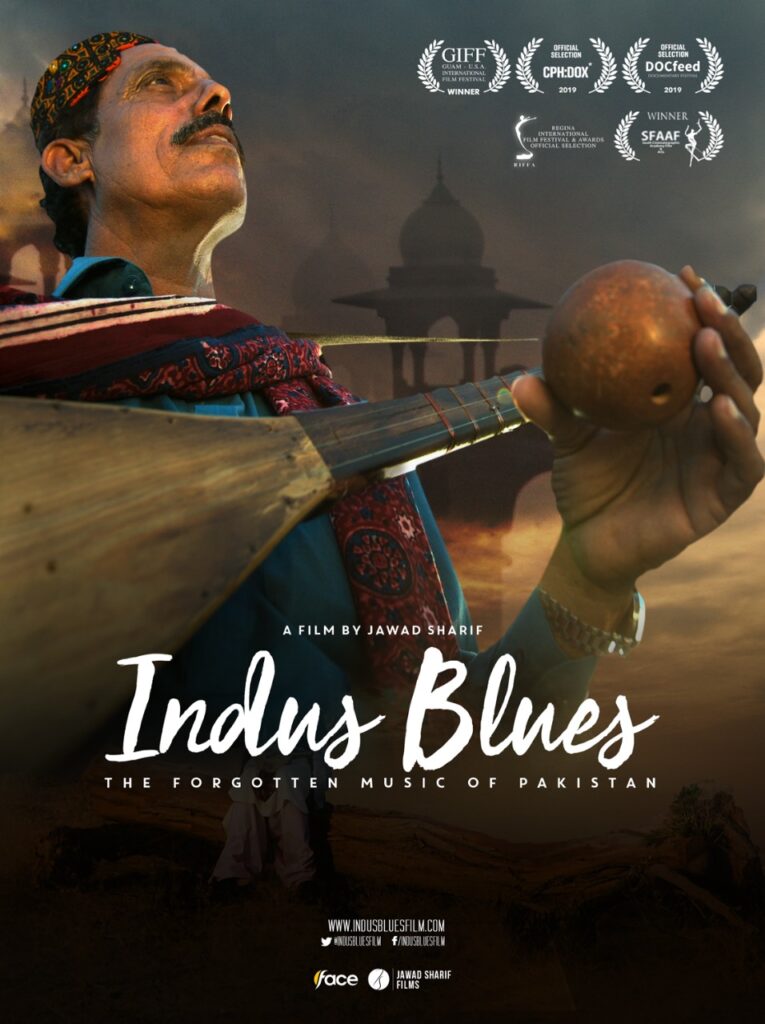
Indus Blues (2018, Dir. Jawad Sharif, Platforms: YouTube, Al Jazeera Documentary).
Sub-Genre: Documentary/Observer Mode
The documentary Indus Blues is a monumental, multi-layered examination of the dying folk musical culture in Pakistan. Sharif organizes the film in a sequence of immersive observational shots, instead of a sequential narrative, to give viewers the chance to live vicariously through the musicians. The documentary interviews are natural and fit in the natural settings of musicians. This type of style does not make the subjects look detached or framed artificially but captures their real lives. Sharif likes to shoot these interviews in the open air, and to place the interviewees in the background against large landscapes deserts, villages, bank of rivers, mountain slopes, connecting their own histories with the geography and cultural eco systems. The framing decisions tend to put musicians a bit to the side, adhering to rule of third composition but still giving it an organic look of reality, and yet still beautiful art.
The b-roll is massive and deeply chosen to reveal not only the activity on the surface, but the cultural processes that are behind the work of every musician. The shots of wood carvers, animal skin stretching, metal melting, or string tuning are captured in the macro close up shots which establish a tactile relation with the viewers. The shots are expressive of texture and labour, the body of it in the maintenance of cultural identity. Landscape b-roll is also very strong – long, sluggish shots of rivers and deserts put culture in context of nature, generating a poetic commentary on the tie between intangible heritage and the land per se. Such images do not just accompany interviews, but by providing viewers with a sense of context and emotion, they add depth, and enrich it.
There is not a great deal of narration, with a few instances where the background is given necessary. Rather, the story is based much on the testimonies of the musicians hence giving authority to the subjects. Lower-thirds are simply constructed and not overloaded with design, which goes in line with the minimalism nature of the documentary.
Sharif does not use flashy graphics in an effort to be authentic. The sound design is the genius of the film. Sharif captures the instruments in real-time, incorporating their inherent flaws and the surrounding background sounds nature, wind, traffic etc in the songs. This gives the music a lived-in sound instead of a studio sound. The surrounding sounds put the musicians in their socio-economic and environmental context and strengthen the realism aspect of the documentary. The editing pace is sluggish and reflective to enable every moment to linger. Such a decision does not only create an emotional charge, but also reflects on the gradual, progressive process of eroding a culture of traditions, which implicitly incorporates the theme into the very rhythm. Thematically, Indus Blues tells a story about cultural decadence, cultural neglect among generations, identity and emotional strain on those who hold the tradition. The level of representation is done with utmost respect; musicians are not depicted as objects of history but as the custodians of a culture. Sharif does not exoticise or mock them, rather, his attention is on their love, technical proficiency and emotional frailty. The appeal to the audience is based on the global topic of the culture preservation, emotional closeness of the interviews, and spectacular camera work. In my film Attabad to Ajrak, this documentary was of vital inspiration, and the use of the landscape as emotional metaphors, silence acting as a narrative weight, and the use of cultural objects, in my case, the Ajrak, as the objects of the emotions and historical value.
References;
Indus Blues (2018)
Sharif, J. (Director). (2018). Indus Blues [Documentary]. Foundation for Arts, Culture & Education (FACE). https://indusbluesfilm.com
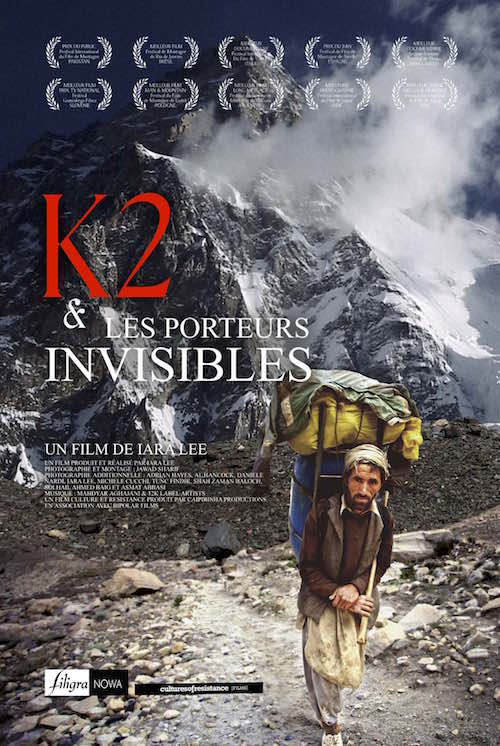
Case Study 3: K2 and the Invisible Footmen (2015, Dir. Jawad Sharif, Platforms: Film Festivals, Vimeo On Demand)
This is a case study about a film that revolves entirely around the concept of the invisible footmen and how they impact people’s lives. Sub-Genre: Human Interest /Expedition Documentary. K2 and the Invisible Footmen is a story of the unglamorous porters who render climbing expeditions to K2 achievable. The interview style used by Sharif is very humanistic because he captures topics in their natural settings instead of in a studio. The interview framing is indicative of the low end of their job the wide shots of the great mountains blending the porters with the medium shots affording to show that they are tired, determined and vulnerable to their emotions. The shots are often blocked by camera on the breath patterns, trembling hands, reflective pause, adding to the aura of raw emotion. These decisions bring out the physical and psychological price of their labor.
The b-roll is one of the most radical in the documentary filmmaking of the Pakistani. Both suspense and empathy are created with the help of shots of slippery ice ridges, avalanche-prone slopes and storm-lashed tents. The scenes make the audience feel that it engulfs them in the dangerous environment that porters live in their everyday lives. Home life B-roll makes the viewer’s emotionally contrasting with mud houses, families waiting, smiling children, reminding them that these men are not only employees, but father, husbands, and members of the community. Sharif does not use heavy narration and lets the story develop with the help of interviews, ambient sound, and sequences of sight. There are lower-thirds that are presented only to recognize climbers, porters, and locations, but that do not interfere with the visual flow of the documentary. The sound design makes it more authentic: the howling wind, crunching snow, metal crampons and the weird silence of the mountains. This sound atmosphere of naturalism makes the environment more immersive and focuses on isolation. The editing between the slow and reflective scenes and the high intensity mountain climbing scenes reflects the unpredictability of the mountain. The documentary touches on inequality, invisibility, sacrifice, disparity of classes and human perseverance as a theme. The porters have their dignity and power concentrated in representation. Sharif also reverses the expectations of many adventure movies where the hero is a heroic figure in the middle of the story, but he creates a character who is not the hero in the film: the one who is not seen but needs to be included. I create engagement with the audience via empathy, visual impact, and moral reflection which appeals to the emotions that I want to raise in Attabad to Ajrak. The movie also taught me to leave space and surrounding to do the job of emotions and to portray the characters with a respectful distance.
Refrences;
K2 and the Invisible Footmen (2015)
Sharif, J. (Director). (2015). K2 and the invisible footmen [Documentary]. Bipolar Films. https://vimeo.com/ondemand/k2andtheinvisiblefootmen
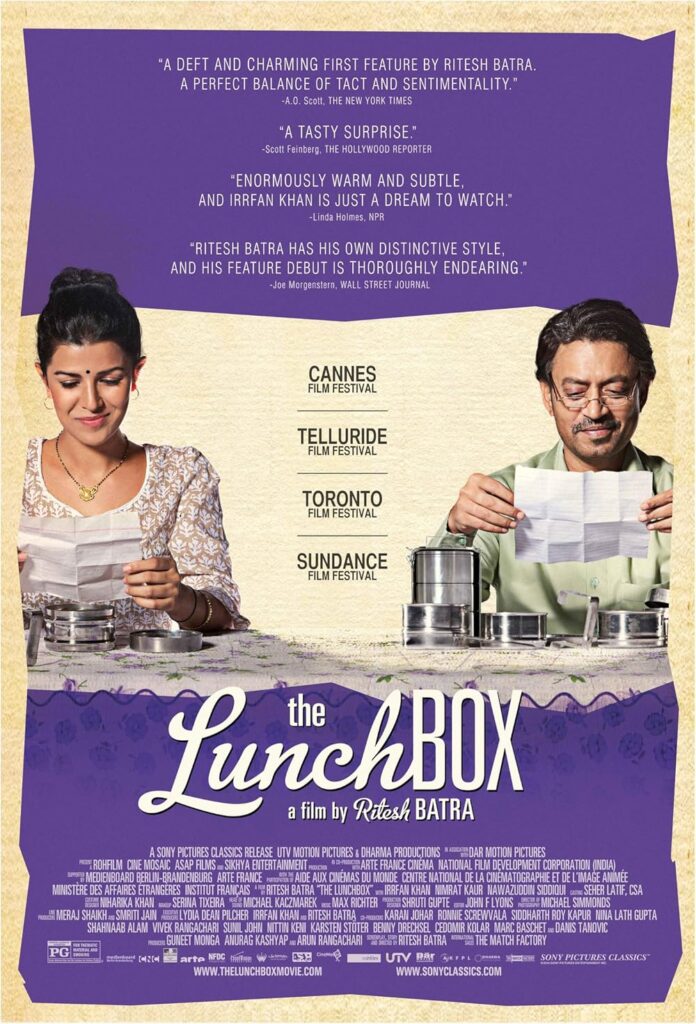
CASE STUDY 4: The Lunchbox (2013, Dir. Ritesh Batra, India) The Lunchbox (2013, Dir. Ritesh Batra, India)
The Lunchbox (2013, Dir. Ritesh Batra, India) is a case study movie about a man experiencing personal turmoil, absent of romantic relationships. The film that focuses on a man who is personally in crisis, without romantic relationships. Genre: Romantic Drama / Social Realism, Sub-Genre. Starring: Irrfan Khan, Nimrat Kaur, Nawazuddin Siddiqui. Sources: Netflix (regions), Film Festivals, Blu-ray. Brief Synopsis The Lunchbox is a story of the unbelievable emotional bond between Saajan Fernandes (Irrfan Khan), a widower who is almost retiring and Ila (Nimrat Kaur), a neglected housewife. An unusual confusion in the well-known dabbawala lunch delivery system of Mumbai causes the two to send each other handwritten letters using a tiffin box, and this creates a close connection without them having to see each other. The movie is executed without any noise, noting the emotional requirements, silence, desires, and unspoken wishes of the characters in a busy urban environment. Cinematography and Visual Style. The movie is shot in a carefully personal and observational visual style and thus very applicable to your movie Attabad to Ajrak.
Naturalistic Lighting:
Diffused interiors, soft daylight, and subdued tones are indicative of the life of the working class in Mumbai, which is boring.
Observational Shots:
The shots of Saajan eating alone, using trains, reading letters (long silent shots) also reinforce realism and unspoken emotion – a significant contributor to your idea of silent-connection.
Sound Design:
The sound in the film is diegetic nearly throughout – traffic, fans, knives and cutlery, train screeches, the bang of lunchboxes – the focus is placed on realism, on normal everyday routine.
There is lack of dramatic background score, which is close to documentary-type of storytelling.
There are moments of silence that are used as narrative weight- just like you use silence between Adeel and Mehak in Attabad to Ajrak.
Editing & Pacing:
The editing is deliberately slow, rhythmic, and reflective, which gives an opportunity to emotions to develop slowly.
Scenes are canted on blank areas, unfinished dialogue, and household movements, and this form of quiet tension characterizes the romantic social realism.
Any cross cutting between the home life and the one of office of Saajan and Ila results in a two-fold narrative about isolation and lust.
Representation & Themes:
Loneliness in Urban Spaces:
Even with this density, characters are emotionally distant in Mumbai, and this is also a theme that is similar to the little emotional distance in your movie.
Both Sexes- Expectations and Household roles:
The story of Ila is an illustration of a lot of middle-class women lost in domestic invisibility.
Unspoken Romance:
The affair is created with all parts letters and is almost in line with the silent connection, glances and subdued emotional tension that you play in your own movie.
Cultural Authenticity:
The movie is a realistic depiction of the system of dabbawala, the apartments of middle classes, the commuter train and the office.
Narrative Techniques:
Letters: as Emotional Dialogue:
The emotional storyline is constructed not through verbal communication, but through the written communication, this is how your movie employs non-verbal communication, eye-contact and symbols (such as Ajrak) to express something.
Symbolic Objects:
The lunchbox itself is a kind of iconic object of solace, affiliation, and desire, which is just like the Ajrak as an icon of emotional anchorage in your movie.
Relation to my movie Attabad to Ajrak, The Lunchbox is a perfect source of hybrid romanticrealist style:
1. Understated Romance:
Similar to my film, it does not prove to be too romantic proclamations but counts on some emotional undertones.
2. Social Realism:
It employs actual settings, natural acting and little artificiality – just like the documentary impression of Attabad to Ajrak.
3. Silence as a Narrative Tool:
Both movies employ silence, gaze and surroundings to convey emotions instead of talking.
4. Symbolism of objects used in the film:
Lunchbox = emotional intimacy.
Ajrak shawl = remembrance, identity, romantic symbolism.
5.Deliberate and aesthetic of the slowness of camera movement:
Wide shots, naturalism, surround sound, all of which are contemporary to the style of Attabad to Ajrak
Refrences;
The Lunchbox. (n.d.). In Wikipedia, The Free Encyclopedia. Retrieved November 23, 2025, from https://en.wikipedia.org/wiki/The_Lunchbox Wikipedia
Iqbal, N. (2014, April 10). The Lunchbox director on India’s new taste for realism. The Guardian. https://www.theguardian.com/film/2014/apr/10/the-lunchbox-director-ritesh-batra-india-new-taste-realism
CASE STUDY 5: Highway (2014, Dir. Imtiaz Ali, India)
Sub-Genre: Romantic Drama / Road Journey Film
Platforms: Netflix (regional availability), Blu-ray, film festivals, VOD
Highway (2014), directed by Imtiaz Ali, is a romantic drama that blends a road journey travel aesthetics with much inwardly reflecting emotional story. The movie is about Veera (Alia Bhatt), a city girl with a wealthy family and Mahabir (Randeep Hooda), a man with trauma and emotional wounds that are caused by an accident that results in their unplanned meeting in distant places in India. Instead of melodramatic or overdramatic dialogue, Highway can express emotion by silence, setting, micro-expression, the slow erosion of the emotional barriers of the characters. The technique of narration leads to a naturalistic, near meditative, description of the connection.
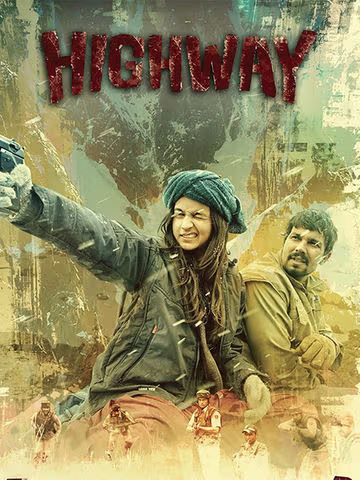
The film takes a poetic observational approach in terms of cinematography that reflects most of the documentary norms. The predominance of the frame is taken by the use of long takes, wide travelling shots and natural light, which in turn enables landscapes to be used as emotional representations and not as the background. The characters in sunset scenes are usually bathed with warm golden light, and this represents brief comfort and inner release. Conversely, the scenes set in the colds of the mountain highlight the emotional indecisiveness of Veera and the natural reserve of Mahabir. The camera also tends to keep a respectful distance, watching the characters instead of invading them which identifies the film with realist traditions. Close-ups are rarely used yet affectively with raw vulnerability being made without theatrics. Costume design in Highway helps in creating emotional and symbolic language of the film. The dressing code of Veera changes to refined and city-style into plain shawls, oversized sweaters and dresses worn during the travelling. Her costumes embrace naturalistic and toned-down colors, which are in unison with the natural settings and give the impression of change, freedom, and emotional stability.
The clothing of Mahabir is plain and coarse all the way through the journey which shows his relation to struggle and hard work as well as the labourers. The movie is intentionally not glamorously styled but tends more to the textured fabrics, warm stoles and culturally versatile patterns, and the characters integrate into the various rural landscapes into a realistic whole. The sound design is also low-key. Most of the audio environment in the film is ambient wind, engine rumble, footsteps in gravel and distant nature sounds. Background score is employed in rare cases and is employed to act as emotional punctuation and not as narrative direction. Silence is an essential factor – it becomes a communicative field of longing, discomfort, freedom, and psychological transformation by the audience. This realistic sound is highly comparable to the style in the works by Attabad to Ajrak where the impact of emotion is achieved by the lack of speech, by the surrounding nature. The movie is an aesthetical challenge to classic romanticism. The relationship between Veera and Mahabir does not rely on verbal confession and drama, but rather, on their vulnerability and the therapeutic influence of landscapes. They have an innuendo, internal and gradual bond, which is created through shared glares, pauses and the physical journey. Highway deals with theme in terms of trauma, social constraint, emotional release, class opposition, and environmental curative force. The movie places the nature as escape and challenge but inviting the viewer to interpret the emotional condition not on the words but mise-en-scene.
Highway represents male experiences of the working-class with a bit of delicacy as opposed to stereotyping, and its female protagonist is free to escape the typical portrayals of femininity in Indian films. Social realism in the film is afforded also by the fact that the film has real locations instead of constructed sets, and does not exoticise the rural India. The camera is not objectifying landscapes or people but rather is shown through the prism of empathy and emotional appeal. Connection to My Movie, Attabad to Ajrak: Highway had a great impact on the emotional and visual language of Attabad to Ajrak.
The focus on non-verbal communication, use of natural scenery as metaphoric images of emotions and the use of restrained acting are all directly related to the style of my film. The wardrobe of Veera, soft textures, and dull color schemes influenced the costuming of Mehak, particularly the Ajrak shawl as an identity-related symbolic object and an emotional attachment.
The movie also taught me how environmental framing, lingering shots and micro-expressions can be used to communicate romantic tension instead of actual dialogue. Equally, the slowness, thoughtfulness, road-journey atmosphere, crude emotionalism of Highway were the influence on my sense of cinematography, colour, and sound soundscapes. The hybridity of the film in terms of romance and social realism is also similar to the hybridized genre of Attabad to Ajrak, which bases emotional narration on the cultural and natural authenticity.
Refrences;
https://www.rottentomatoes.com/m/highway_2014
https://en.wikipedia.org/wiki/Highway_(2014_film)