CCR for Attabad to Ajrak
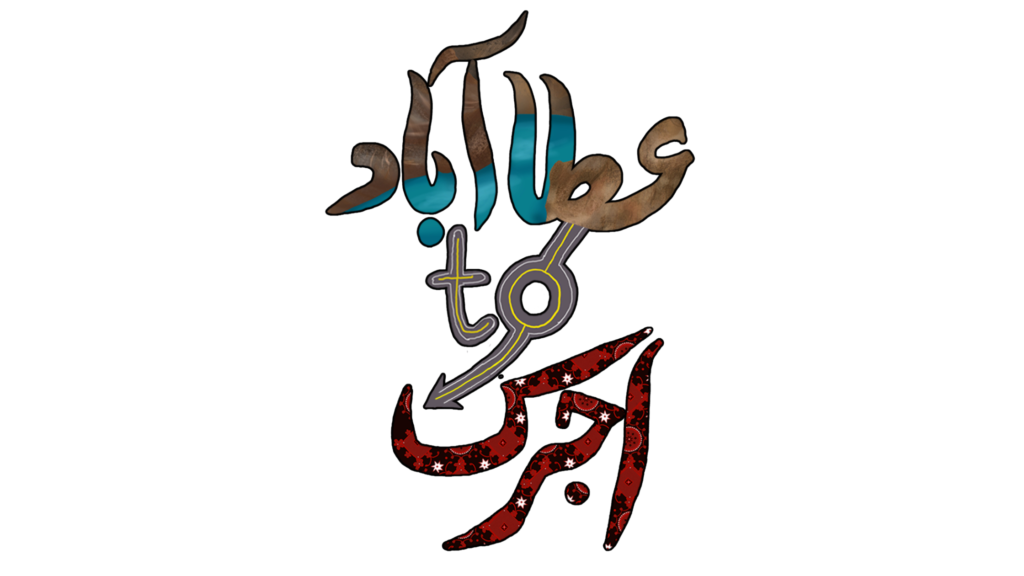
- How does your product represent social issues or social groups?
Attabad to Ajrak is a story about the need to find a universal human to relate, love, and understand despite the limitations of cultural and social classes. It employs its characters, Mehak, an urban artist, and Adeel, a local hotel worker, as representatives of the two different yet complementary social groups in Pakistan: urban elite and rural working class. In their interplay, the movie provokes issues on the existence of cultural dominance, inequality of classes, and emotional concealment in normal societies. The Ajrak tote and her modern clothing but with an cultural touch of ajrak is an expression of Mehak trying to find her way into the world of heritage, yet not wanting to become out of place in the modern world; the mountain image shows the simplicity of Adeel and his quietness through his struggle. It is not a villainous film on one side or the other, instead the film’s representation is sympathetic: it reveals privilege and purity of heart as two facts that coexist. Mehak is not exploitatively curious and Adeel is not weakly restrained; they are both a product of their environments. The issue of gender representation was addressed very sensitively. Mehak is no longer presented as a pathetic love story but as the painter who is inspired by the authenticity of emotions within her sketchbook and constant use of her favourite items ( sweater, ajrak shawl ). The character of Adeel is against the patriarchal dominance, his silence and reluctance in his acting is a sign of respect and introspection, and not authority. The film is also opposed to urban-centric narratives because it places the story in northern Pakistan, an area that is commonly visualized but seldom ventured into depending on emotions. It does not portray the northern culture as a distant exotic setting in the background but as a breathing living thing that has its roots and feelings. In short, Attabad to Ajrak demystifies the separation of classes and sexes but does not make a spectacle of the issue and shows love as a silent resistance to social norms.
- What are the factors of your production that combine to give a branding effect?
The whole creative elements, including film, poster, post card, mercahandise and social media presence were created with coherent brand identity: quiet beauty within restraint. The general visual language of products is based on the muted blue-and-gold palette, as a symbol of hope and melancholy. The Ajrak pattern makes a visual lineup – it seems to be the tote of Mehak in the movie, the graping texture in the poster background, and a pattern in the Instagram posts and reels. This creates the synergy between the product and promotion, which meets the works expectations of branding through cross-media. The still nature and natural light employed in the cinematography of the film reflect the photographic character of the promotional art. On the same note, the typography of the poster: a serif hand embroidery-like script relates the cultural theme to the romantic image. Instagram mock-up continues the same ethos of the brand with the postings of the behind-the-scenes and the reflection of the director with poetic captions (e.g.)’ Ajrak remembers what the lake never says’. Through this the project will brand itself as an intelligent, art-house short instead of a commercial product this fits the identity of majorly pakistan based -film festivals like Karachi Film Festival and if world wide than Goam International Film Festival and more. The brand also includes the soundtrack. The violin and rubab union is the sum of the cultural roots and the modern feeling – just like the characters Mehak and Adeel. When the audience listens to the theme, they are able to relate the theme to the emotional mood in the film. Finally, the branding implies minimalism, melancholy, and cultural intimacy where all the elements of media reiterate the homogenous creative message: love is discovered in the silent gaps between worlds.
- What are the interactions of your products to the audience?
Attabad to Ajrak appeals to the audience by playing upon emotional appeal, cultural genuineness, and graphics instead of traditional exposition. The short movie encourages the audience not to passively watch but to interpret gestures and silence and follow the action with both their feelings and emotions. The decision of an ambiguous ending is a strategic approach of engagement. The film provides the audience with interpretive freedom which causes the viewer to look back after watching and is provoked when the hands of Mehak and Adeel nearly touch but do not. Symbolic mise-en-scene (ajrak, sketchbook, cliffs, water) encourage rewatching and interpretation, which rewarding viewers with their attentiveness. Regarding the theme of expression, most South Asian audiences, particularly the younger generation, can relate to the idea of suppressed feeling in the context of tradition in the film. Its quiet nature sets it apart as compared to the rest of romantic movies, and it is able to attract those who like to think and live in reality. This interaction goes outside the screen with the social media page. It uses captions, stills and polls of the audience (e.g., Have you ever loved in silence? ) to have an emotional conversation with followers. This combines both movie and audience participation in a conversation like format making the project a participatory event as opposed to a single viewing. Created to attract the attention of short-term viewers of such platforms as Instagram Reels, the trailer involves music and a visual montage, which raises the interest of the viewer without revealing the story. The creation of a location reel revealing where the story has been based and captured. This combination of accessibility and artistic values is effective in terms of reaching a broader audience and not weakening the message. Creating a postcard for the film, Attabad to Ajrak which is further also used as an merch to advertise the film and create a community of people having an interest and becoming the part of the journey. Distributing merchandise in form of t-shirts and mugs with the postcard logo helped achieving people’s attention and created curiosity within vibrant colors used in the postcard. It helps in visualising the film and its true purpose, spreading ethnicity with a message.
- What did your research teach your products, and how they use or break traditions?
The conceptual basis of all the creative decisions was given by the research phase.
• Genre Research: The study of romantic short movies, such as Indus Blues, Highway, and The Lunchbox, defined the value of emotional nuances and social naturalism. These had an impact on the minimalist dialogue in the film, the use of long take shots, and emphasis on daily gestures.
- Director Research: Jawad Sharif was the direct inspirer of the style of narration the internal struggle, emotional silence, and the gray spirit. Their influence steered the movie away of melodrama, towards being more natural.
- Institution Research: Learning about Jawad Sharif Films showed how indie short movies have a balance between art and accessibility. This informed the branding of the project as a festival and authenticity.
- Finally, the lesson on Representation and Ethics Research Informed me on how to portray cultural and class disparities without offending anyone, making each character a stereotype. This ethical commitment was also manifested in terms of community consultation when location shooting was done.
Case Studies: In the case study of Indus Blues, specifically, the application of representing culture and mountainous sceneries with hidden perspective of showcasing the music was confirmed, and such a method is reflected by capturing Attabad lake and slightly changing it into a inspired love story in the mounatains between Mehak and Adeel rather than the challenges of music as shown in Indus Blues.
Challenging Conventions: The majority of the South Asian romantic dramas are based on open confession or family resistance. Attabad to Ajrak subverts this allowing silence to be the dominant form of conflict. Instead of a dramatic climax or tragedy, the movie concludes with the ambivalence suspended in the air – defying the urge of the viewer to have a resolution. The film also does not conform to the male gaze by making both of the main characters equally emotional subjective, Adeel is perceived through the drawings of Mehak, Mehak is perceived through the artistic sensitivity of her drawings and her wearing her outfit repeatively to show her possesivenes as in her nature.
Use of Conventions: The movie does not lose the tropes of the genre meet-cute, montage, emotional climax, being familiar but adding cultural specifics to the narrative. Cinematic codes like hand-held shots, natural lighting and diegetic sound were intentionally employed to increase authenticity which was reflective of the conventions of indie realism. In general, the study turned what would otherwise be just a love story into a socially embedded movie declaration one in which form and content work in unison together to suggest love as a response to cultural restriction.
The climax of all these research strokes was such that Attabad to Ajrak was not a solitary creation, but the result of a deliberate discussion with film practices, cultural morals and viewer demands. In the end, it turned out to be not only a lesson in learning how form can speak meaning that is not necessarily dialogue but also how silence and distance and landscape can be story tellers. Combining lessons concerning worldwide and South Asian short movies, institutional studies, genre norms, and moral theories, the movie turns an ordinary encounter into a comment on belonging, holding back, and cultural identity. In the process, the artistic product grew up into a movie that is conscious of its place in the broader context of Pakistani indie film but that could communicate a universal emotional language. This manner of presentation, besides capturing the results of the study, transforms into a personal aesthetic expression that is welcoming of tradition yet slightly subversive enough to create a sense of self-reflection in the audience and leave the beauty hanging in the air.